


Tying Yourself In Knots

Hello,
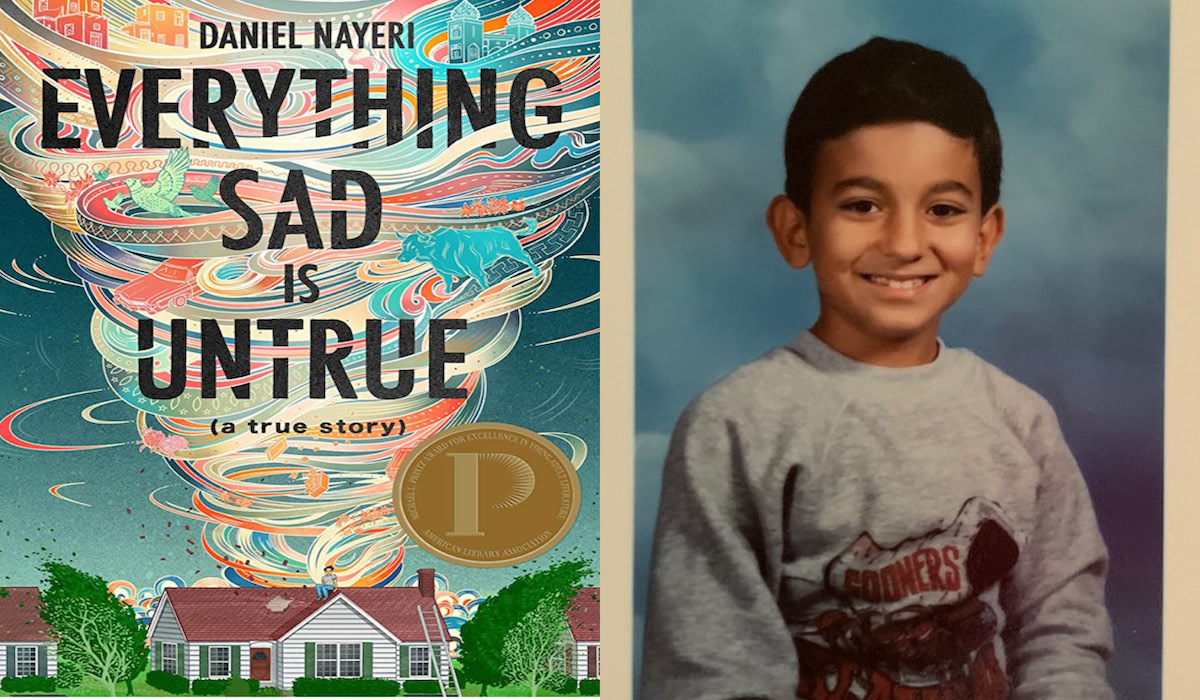
Daniel Nayeri’s Everything Sad is Untrue is the kind of book that lingers in your mind long after you finish it, partly because it understands something essential about storytelling itself. Throughout the memoir, Nayeri references Scheherazade, the storyteller from One Thousand and One Nights, who tells stories to stay alive. Every night, she leaves the king suspended inside a narrative so that he will spare her life long enough to hear the next part.
Lately, I have been thinking about how often human beings do something similar. We tell ourselves stories constantly, not only to entertain ourselves, but to survive uncertainty, humiliation, fear, disappointment, and change. The stories we inherit and repeat become frameworks for how we understand ourselves and other people. Some of those stories help us keep going. Others quietly trap us.
When I was younger, I told myself stories about perfection. I thought talented people arrived at expertise naturally. I assumed capable people moved smoothly from effort to mastery without awkwardness or visible struggle. When I encountered people who seemed extraordinary, I saw only the finished performance, not the years of revision, frustration, embarrassment, repetition, and failure hidden underneath it.
That story shaped me more than I realized at the time. If you believe other people arrived at excellence effortlessly, then your own struggle starts to feel like evidence that you do not belong. The distance between where you are and where someone else appears to be can become so psychologically overwhelming that trying itself begins to feel dangerous. Sometimes people avoid learning new things entirely because they cannot tolerate being visibly imperfect long enough to improve. What begins as admiration can quietly harden into paralysis.
I think there is another question buried inside that tension too: what responsibility do capable people have to make learning visible? If mastery only presents itself as polish, then it becomes easy for everyone watching to believe they are incapable before they have even begun.
That is one of the reasons Nayeri’s book affected me so deeply. Everything Sad is Untrue is full of stories about being visibly unfinished in public. Nayeri writes about immigrating from Iran, navigating unfamiliar systems, misunderstanding cultural expectations, and trying to survive the exhausting experience of constantly not knowing the rules everyone else seems to understand instinctively.
Some of the moments are funny. He describes the panic of trying to use a Western toilet at a friend's house after growing up with Persian toilets where you squat instead of sit. Other moments are painful. He writes about classmates mocking his food, his smell, his family, and his differences. What stayed with me was not simply the vulnerability of those moments, but the visibility of the learning inside them.
We often talk about growth as though it is clean and linear, but most real learning happens awkwardly and publicly. It happens while misunderstanding, fumbling, failing, revising, adapting, and trying again anyway. For the first three decades of my life, I interpreted those moments as evidence of inadequacy.
In college, for example, I studied English and spent years having my writing evaluated. Over time, I stopped writing for discovery and started writing for approval. My relationship with creativity became tangled up in other people’s assessments of whether what I made was good enough.
The strange thing was that external validation never actually resolved the tension. Sometimes I received high grades on papers I secretly believed were weak, and the praise felt hollow because it did not align with my own sense of integrity. Other times, I submitted work I genuinely cared about and felt devastated when it was criticized.
At the same time, I was taking pottery to fulfill an art requirement. Pottery is humbling in an immediate and physical way. One wrong move and the piece that you're working on collapses. Even when you put your heart and soul into it, even when you think it's good, it can explode in the kiln because you did something wrong that you didn't even see. Just like everything else in life, there is no way to become good at wheel throwing without first producing a long series of lopsided failures.
Nevertheless, I loved it. Looking back, I think part of what felt so freeing about pottery was that I could find joy in the process regardless of the product I produced. Failures were just a reason to make more pieces. My drive wasn't to be the best; it was to be there.
Educators sometimes describe this through ideas like James Nottingham’s “Learning Pit” or Michael Fullan’s implementation dip, both of which recognize that growth often looks like one step forward, two steps back. Learning rarely feels graceful while it is happening.

Competence is usually built through visible awkwardness first. Unfortunately, that is not the story many of us learn to tell ourselves. Instead, we internalize the idea that struggling means we lack ability, that mistakes reveal deficiency, or that uncertainty means we are failing. We compare our beginnings to someone else’s mastery and then feel ashamed that we cannot immediately perform at the same level. In short, trying starts to feel dangerous because trying visibly risks imperfection.
Parenthood complicated that story for me even further. Children are visibly unfinished human beings. They melt down, misunderstand, stumble, fail, and learn in full view of everyone around them. Becoming a parent forced me to confront how impossible it was to demand grace for myself while withholding it from them. I could not ask my children to believe mistakes were part of learning while treating my own mistakes like moral failures.
Around the same time, I also started thinking differently about creativity itself. I crochet, quilt, and bake, all practices that carry visible traces of the person making them. Quilt seams drift slightly. My cake decorations are hit or miss. My crocheting looks like it's handmade...because it is! Years ago, those imperfections would have bothered me. Now I often find them comforting. They remind me that something made by human hands carries evidence of the human being who made it.
That is what brings me back, over and over again, to the Persian flaw. In Everything Sad is Untrue, Nayeri describes how Persian rugs often contain an intentional flaw woven into the design. What stayed with me was not the idea that human beings are imperfect. I already knew that. What stayed with me was the realization that someone capable of extraordinary mastery would intentionally preserve evidence of humanity within the work itself. The flaw matters precisely because the artist is capable.
In other words, the Persian knot is not an argument against striving. It is not carelessness disguised as wisdom. If anything, it reflects a kind of humility that can only emerge after mastery. It acknowledges that even highly skilled people remain unfinished, still learning, still human.
Maybe that is part of what stories like Scheherazade’s are doing too. Not teaching us something entirely new, but reminding us of truths we are constantly pressured to forget.
Lately, when I catch myself tying everything into knots trying to get it exactly right, I find myself thinking instead about the Persian flaw, about visible learning, about unfinishedness, about stories told for survival. I think about the strange comfort of realizing that some of the most beautiful things human beings create still leave room for evidence of the hands that made them.
~Heather
P.S. There is a noticeable difference between students who are reading because they have to and students who are reading because they want to know what happens next.
That is why my Catch of the Week this week is good books.
I was recently in two different classrooms where students were genuinely excited about what they were reading. They were talking about characters, predicting outcomes, and reacting emotionally to the story. The energy in the room felt different. Reading was not a task to complete. It was an experience they were invested in.
That reminder stayed with me. Strong readers are not built through pressure alone. They are built through momentum. One good book leads to another. A story that connects with a student becomes fuel to keep reading, exploring, and growing.
The catch is this: sometimes the key to creating readers is not pushing harder. It is helping someone find the right book at the right time. A great book does more than teach literacy. It creates curiosity. Which leads me to ask you to share the title of a good book I should check out! Here are the books the students were reading.


Rules by Cynthia Lord and The Miraculous Journey of Edward Tulane by Kate DiCamillo. I ended up reading both, and highly recommend!
P.P.S. Please remember to...
Like and share this post
Check out other posts
Subscribe to www.lyonsletters.com
Buy and rate your copy of Engagement is Not Unicorn (It's a Narwhal),
From Amazon or Barnes & Noble


Comments