


Two Truths and a Lie

Hello,
Imagine you and I are playing a familiar game: Two Truths and a Lie. It is simple, recognizable, and, in many ways, revealing.
Here are mine.
I never paint my fingernails.
I hate sushi.
Two of my children are named after people in my family.
Take a second and decide which one is the lie.
The lie is that two of my children are named after people in my family. Only one of them is. What makes that lie effective is that it is close enough to the truth to feel believable. It is not outrageous. It sounds reasonable.
That is the traditional version of the game. Two things are true, and one thing is not. It is straightforward, and it invites you to find the answer.
Now shift with me to a different experience that complicates that simplicity. It is similar in that you are sharing two truths, but these truths are ones that others find contradictory. I experienced this for the first time at a conference where the presenter asked us to find a partner. My partner looked at me and said, “I am an athlete, and I am intelligent.”
For some people, those two statements do not belong together. There is an assumption that if you are one, you cannot be the other. That you are either an athlete or you are smart. For her, both were true, and nothing she said was false. The “lie” in that moment was the assumption that those two truths could not coexist.
That moment has stayed with me because it reveals something we do constantly. When something feels contradictory, we resolve the discomfort by choosing one side. We simplify something that is actually complex, even when that simplification costs us understanding.
Oversimplification happens in schools with adults regularly. I am thinking about the phrase “I do what is best for kids.” It sounds clear, definitive, and singular, as if there is one right answer waiting to be identified. There isn’t.
Two people can both say, “I am doing what is best for kids,” and genuinely believe it, and yet be advocating for two completely different, even opposing, actions. That does not automatically make one of them wrong. It means they are seeing different parts of the same reality.

In Fierce Conversations, Susan Scott, author and CEO of Fierce Inc., shares a metaphor that helps make sense of this. She asks us to imagine a beach ball with different colored stripes, each one unique. If you are holding the ball and looking at it from one angle, you might see a yellow stripe clearly. Someone standing across from you might only see a blue stripe. When asked what color the ball is, one says, “I see blue,” and the other says, “I see yellow.”
Each person is telling the truth, but the problem begins when one person insists that their stripe is the entire ball. Understanding that you can see one color clearly and that there can still be colors you do not see is what leadership is all about.
In my post "On Target," I described leadership as a series of concentric rings, like a target, instead of the more common image of a wheel where students sit at the center and everyone else connects to them like spokes. In that traditional model, everyone appears equally connected to students, but the targeted model is more honest about how schools actually function.
In the targeted model, students remain at the center, but it also acknowledges that not everyone is directly connected to students in the same way. The only group that directly interacts with students is the next ring, made up of teachers and families, the people who respond to students in real time and experience the impact of decisions most directly. The next ring includes building leaders and teacher leaders who support that work rather than replace it. Beyond that are district leaders, whose role is to provide the structure, systems, and resources that allow that work to happen effectively.
In other words, many roles in a school system do not directly impact students. They indirectly impact students by supporting the people who do. That distinction matters because proximity shapes perspective. Each ring sees something different. Each ring contributes something essential. Each ring is incomplete on its own.
However, depending on where you sit on the target, how you answer the question “Do what is best for kids” changes. Parents answer that question for their child. Teachers answer it for their class. Principals answer it for their school. Superintendents answer it for their district. Each of those answers is true. Each of those answers is also incomplete. No one role can do the work of the others, and no one role can fully answer the question on its own. Unfortunately, we often act as if they can.
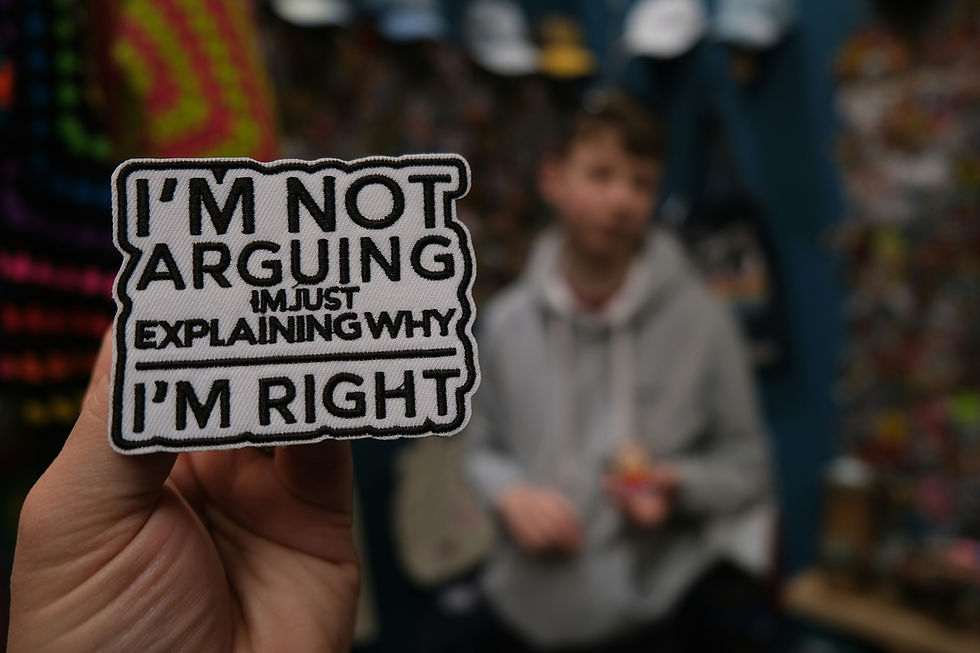
This is where the phrase “what is best for kids” can become problematic. It can sound like, “I am doing what is best for kids,” which implies that someone else is not. It can sound like, “If you really cared about kids, you would support this,” which shuts down conversation before it even begins. In those moments, the phrase stops being a shared goal and becomes a way to justify a decision that has already been made. That is not leadership.
In an upcoming post, I will share the importance of knowing your values and using them as a lens for decision-making. Leadership is not about having the right answer in every moment. It is about being clear enough about what matters that your decisions are consistent and transparent.
The same idea applies here. Leadership is not about asserting your personal definition of what is best for kids and expecting others to follow. Leadership is about building a shared understanding of what “best for kids” actually means within your district so that each school, principal, teacher, and stakeholder is guided by something collective rather than individual.
That collective work is harder. It requires listening across perspectives, holding tension, and resisting the urge to simplify something that is inherently complex. It requires acknowledging that no single vantage point is sufficient. When that work is done, however, something shifts. The question is no longer, “Do I think this is best for kids?” The question becomes, “Based on what we, as a team, have defined as best for kids, does this align?” That is a very different conversation.
Two people can look at the same situation and come to completely different conclusions about what is best for students. One person may see opportunity, engagement, and growth. Another may see stress, imbalance, or unintended consequences. Both perspectives can be grounded in genuine care for students. Both can be sincere. That is the point. When something is subjective, two opposing ideas can both feel true at the same time because they are shaped by different experiences, responsibilities, and priorities.
Being sincere, however, does not automatically make a decision right. Most of the time, when people say they are doing what is best for kids, it is not outrageous. It sounds reasonable, just like the lie I told you at the beginning of this post. It is grounded in something real. That is exactly what makes these conversations difficult.
My values say we need to talk with each other. They say that how we make decisions matters just as much as the decisions themselves. They say that the impact on culture is not a side effect; it is part of the outcome. Moving forward without collaboration, even with good intentions, comes at a cost. The erosion of trust, the breakdown of collaboration, and the message it sends about whose voice matters are not separate from what is best for kids. They shape it.
Without a shared understanding, we end up in a constant tug of war, moving from one idea to the next, chasing what is new or exciting without a clear filter for what actually matters. That is not alignment. That is noise. Even worse, the discrepancy between my definition and yours about what is best for kids can become divisive, detrimental, and ultimately lead to poor outcomes for students, the very opposite of the intended impact.
If we want to do what is best for kids, we have to do the harder work first. We have to define, together, what “best” means in our context. We have to build that shared understanding across roles, perspectives, and experiences. Only then can we use "what's best for kids" as a lens. Only then can we recognize that the lie is that my truth is the only truth.
~Heather
P.S. We spend a lot of time thinking about big changes. New goals. Major decisions. The next step.
That is why my Catch of the Week this week is something smaller: consistency. Not the kind that is loud or impressive, but the kind that shows up quietly over time. The workout you almost skipped. The email you followed up on. The five minutes you spent starting something instead of waiting for the perfect time.
It is easy to underestimate those moments because they do not feel like breakthroughs. They feel ordinary. They are not. Consistency compounds. It turns small actions into meaningful progress. It builds confidence not from one big win, but from a pattern of showing up again and again.
The catch is this: most outcomes we admire are not the result of one defining moment. They are the result of many small ones, repeated long enough to matter.
P.P.S. Please remember to...
Like and share this post
Check out other posts
Subscribe to www.lyonsletters.com
Buy and rate your copy of Engagement is Not Unicorn (It's a Narwhal) and
The BIG Book of Engagement Strategies
from Amazon or BarnesandNoble.com


Comments